Key Highlights of Self-Produced and Self-Consumed Solar Power: Decree 135
10/03/2026 · 3 min read
Learn about the new regulations on self-produced and self-consumed solar power under Decree 135/2024/ND-CP: surplus power sales, grid connection procedures, and solutions from SVP Solar.
Key Highlights of Self-Produced and Self-Consumed Solar Power: Decree 135
The issuance of Decree 135/2024/ND-CP by the Government marks a major legal milestone for the self-produced and self-consumed solar power model in Vietnam. After a long wait for a clear policy framework, both households and businesses now have a solid basis to confidently install rooftop renewable energy systems to meet their living and manufacturing needs.
Concept of Self-Produced and Self-Consumed Solar Power Under New Regulations
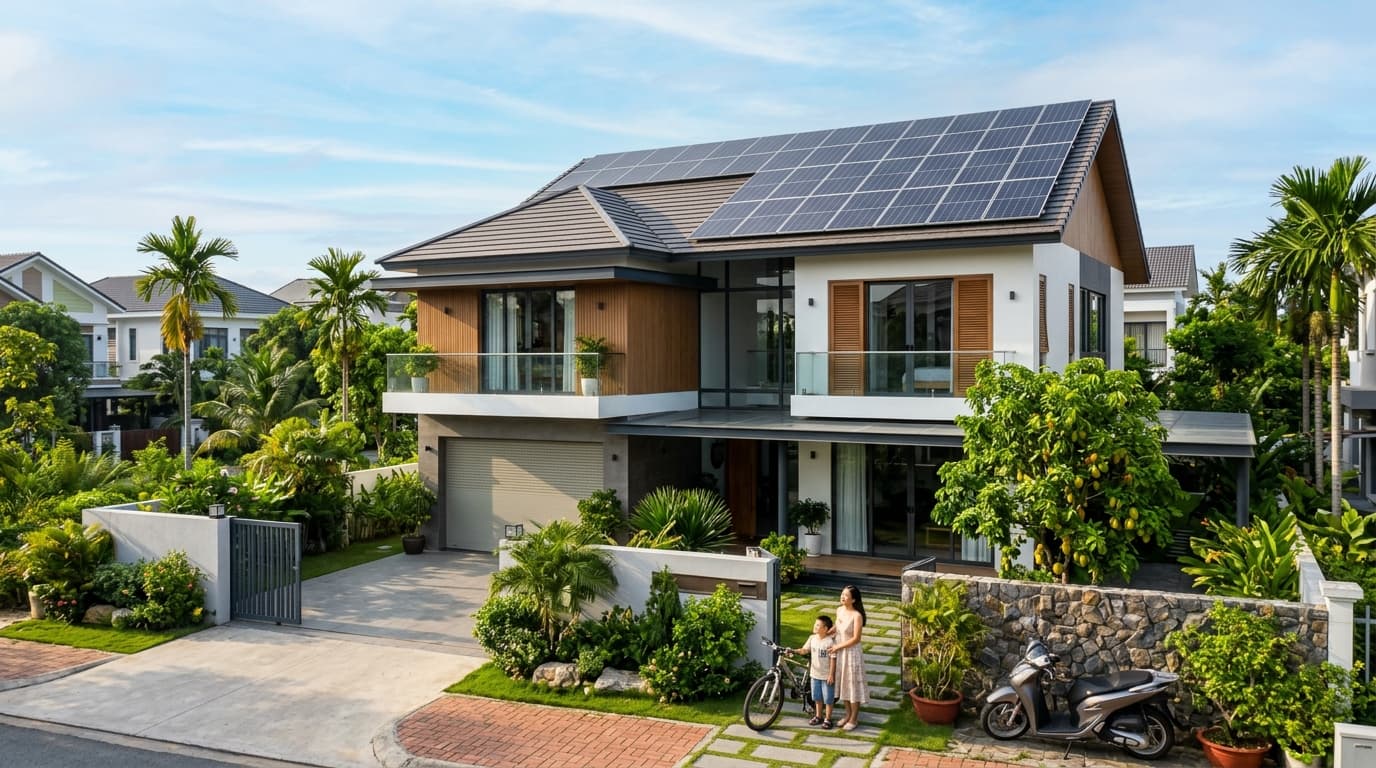
According to Decree 135/2024/ND-CP, self-produced and self-consumed rooftop solar power refers to systems installed on the roofs of construction works (such as residential houses, manufacturing facilities, schools, hospitals) that generate electricity to directly serve the on-site consumption needs of the respective organization or individual.
This regulation applies to both types of systems: those connected to the national power grid (grid-tied) and independent off-grid systems. The core objective of the policy is to encourage the on-site use of clean energy, alleviate load pressure on the national power grid, and work toward Net Zero emission commitments.
Mechanism for Selling Surplus Electricity from Self-Produced, Self-Consumed Solar Power
One of the most anticipated points for users is the mechanism for handling unused surplus electricity. Decree 135/2024/ND-CP specifies:
-
Sale of surplus electricity capped at 20%: For systems connected to the national power grid, if surplus electricity is generated, the investor is allowed to sell it back to Vietnam Electricity (EVN), up to a maximum of 20% of the actual total electricity generated.
-
Surplus electricity purchase price: The purchase price of surplus electricity is calculated based on the average market electricity price of the preceding year as announced by the competent authority. This ensures objectivity and balances the interests of the participating parties.
-
No limit for off-grid systems: Systems installed completely independently without connection to the national power grid are prioritized for development and are not subject to capacity restrictions.
Registration Procedures and Technical Conditions
To ensure systems operate safely and legally, organizations and individuals must pay attention to key procedures:
-
Development registration: Systems with a capacity under 100 kW follow a simplified notification and registration process. Larger systems must complete grid connection agreements with the local power utility.
-
Safety and fire prevention standards: All installations must strictly comply with current regulations on structural building safety, electrical safety, and fire prevention and fighting.
-
Electricity operating license: Systems developed strictly for self-consumption within the permitted limits are exempt from electricity operating licenses as prescribed.
Perspective from SVP Solar Experts
Given the clear legal framework established by Decree 135/2024/ND-CP, investment and installation should be carefully calculated based on the actual consumption profile of each home or facility. Rather than pursuing oversized capacities to sell electricity, the current optimal approach is to design a system tailored to daytime load requirements, or integrate an energy storage battery system to retain surplus power for evening use.
The payback period and actual electricity bill savings will vary depending on site-specific assessments regarding roof area, tilt angle, geographical location, as well as the unique load profile of each facility.
If you are exploring options to install a residential solar system or a commercial factory system, please contact SVP Solar so our engineering team can conduct a site survey and recommend a safe, compliant, and cost-effective configuration.