
Selling Up to 50% of Surplus Solar Power to the Grid: New Regulations
10/01/2026 · 3 min read
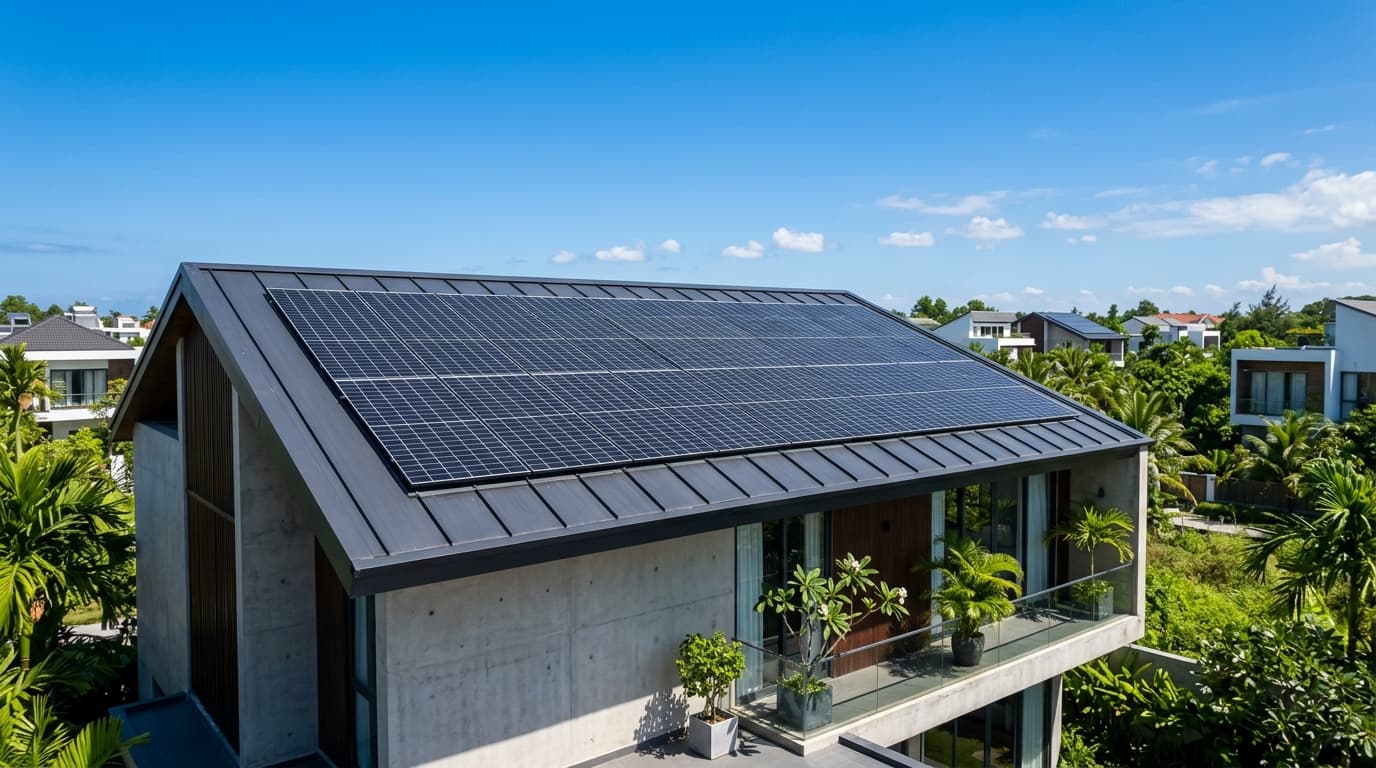
New regulations allow selling up to 50% of surplus solar power to the grid. Learn about detailed conditions, buy-back pricing, and optimal installation solutions from SVP Solar.
Selling up to 50% of Surplus Solar Power to the Grid: New Regulations
Renewable energy development policy has recently reached an important milestone with a new mechanism allowing households and businesses to sell surplus solar power back to the grid at a rate of up to 50% of total generated output. This is great news for investors who operate or plan to invest in residential rooftop solar power systems as well as office buildings, helping optimize the value of self-generated clean energy.
Key Updates on Surplus Solar Power Grid-Feeding Ratios
Previously, under early regulatory frameworks such as Decree 135/2024/ND-CP, surplus electricity from self-production and self-consumption models exported back to the national power grid was only compensated up to a maximum of 20%. However, the latest regulatory amendments have raised this ceiling to a maximum of 50%, based on power purchase agreements between power generation owners and the utility.
Notably, the new mechanism introduces flexible options: from now until 2030, the two parties may negotiate a surplus electricity sale ratio higher than 50% if local substation and distribution line infrastructure possesses adequate safe absorption capacity. For remote, mountainous, border, or island areas without national grid connectivity, the surplus solar power purchase ratio is completely unrestricted and calculated based on independent bidirectional meter data.
Applicable Entities and Tariff Calculation Methods
The new policy framework clearly defines eligible participants under the surplus electricity trading mechanism, including:
-
Households and individual residential dwellings with rooftop solar installations.
-
Office buildings, public agencies, and administrative headquarters.
-
Facilities connected to low-voltage power levels or covered under local power distribution infrastructure planning.
The designated direct power off-taker is Vietnam Electricity (EVN). Regarding the purchase price, payments are calculated based on the average electricity market price of the preceding year announced by state regulatory authorities. In cases where this price exceeds the generation ceiling price for ground-mounted solar power plants (without storage systems), the corresponding regional ceiling will apply as the payment benchmark.
Facility owners selling electricity must complete all grid-connection procedures, technical agreement dossiers, and registrations in accordance with regulatory agency guidelines to ensure legal compliance.
Technical Considerations to Optimize Efficiency When Selling Solar Power
Although the mechanism allows selling a portion of surplus electricity, the core objective of rooftop solar remains on-site self-consumption. Surplus power purchase rates under market mechanisms are typically lower than the tiered retail electricity tariffs customers pay when consuming power from the grid. Therefore, sizing a system capacity that closely aligns with the daytime load profile consistently delivers the highest economic return.
To achieve greater energy independence, combining a hybrid inverter with a battery energy storage system is a solution well worth considering. This setup stores surplus daytime generation to power equipment at night, reducing low-tariff electricity sales while ensuring an uninterrupted power supply during grid outages.
Partner with SVP Solar for Precise Solutions
Every roof has unique characteristics in terms of solar orientation, tilt angle, usable surface area, and electricity consumption habits. At SVP Solar (Sao Viet Phat), we avoid making generic promises about payback periods or fixed cost savings, because real-world efficiency always depends on detailed technical survey results.
SVP Solar's engineering team is always ready to assist clients with accurate capacity calculations, genuine equipment recommendations, and guidance through grid-connection procedures under current regulations. Customers seeking clean energy consulting can contact SVP Solar for an on-site survey and receive the most tailored solution for their project.